

Exploring the realm of real estate agent websites, this introduction sets the stage for a deep dive into the importance of having a strong online presence in the competitive world of real estate. From highlighting the benefits of a well-designed website to discussing key features that drive effectiveness, this overview aims to captivate readers from the start.
As we delve further, we will uncover the significance of design, layout, content creation, functionality, and user experience in creating a successful platform for real estate agents.
Importance of a Real Estate Agent Website
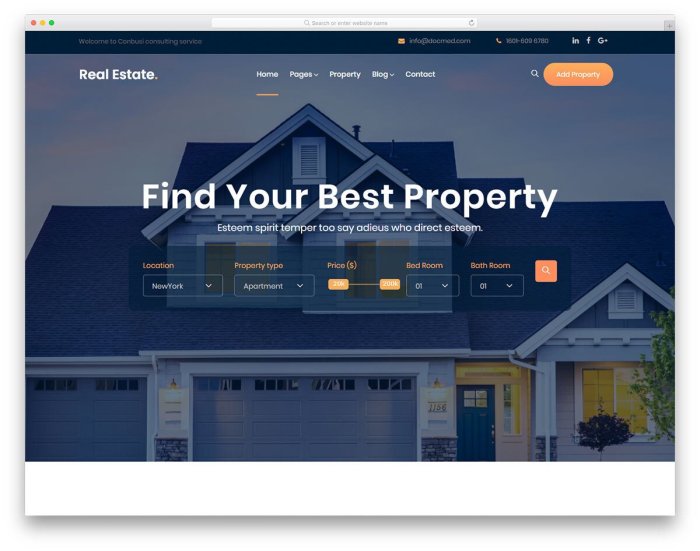
Having a strong online presence is essential for real estate agents in today's digital age. A well-designed website can serve as a powerful tool to showcase listings, attract potential clients, and establish credibility in the competitive real estate market.
Benefits of a Well-Designed Website
- Increased Visibility: A professional website allows real estate agents to reach a wider audience and stand out among competitors.
- 24/7 Availability: Potential clients can access property information and contact the agent at any time, even outside of business hours.
- Showcase Listings: High-quality photos, virtual tours, and detailed descriptions can be easily displayed on a website, attracting more interested buyers.
- Build Trust: A well-maintained website with client testimonials and informative content can establish trust and credibility with potential clients.
Key Features of an Effective Real Estate Agent Website
- Responsive Design: Ensuring the website is mobile-friendly for users browsing on smartphones or tablets.
- Search Functionality: Easy navigation and search options for users to find specific properties based on their preferences.
- Contact Form: A simple and accessible way for clients to reach out to the agent for inquiries or appointments.
- Optimization: Implementing strategies to improve search engine rankings and drive organic traffic to the website.
Design and Layout
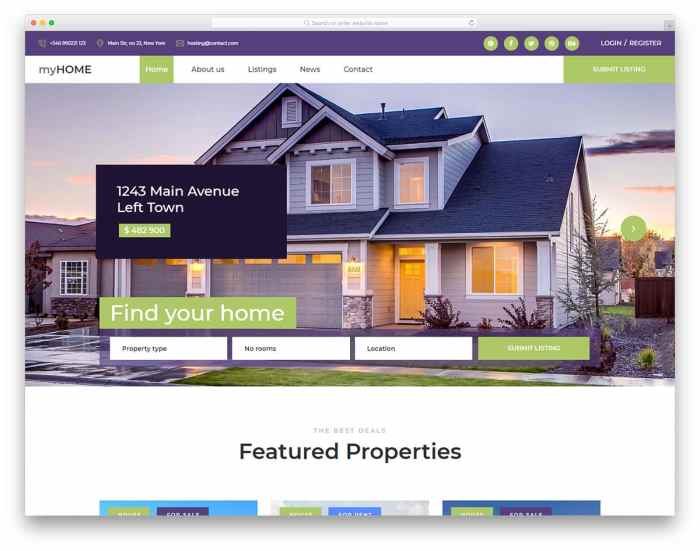
When it comes to real estate agent websites, having a visually appealing design is crucial. The design of a website is the first thing visitors notice, and it can greatly impact their overall impression of your brand. A well-designed website can help build trust with potential clients, showcase your properties in the best light, and ultimately lead to more conversions.
Importance of Visually Appealing Design
A visually appealing design can make your real estate website stand out from the competition. It can help create a professional and polished image for your brand, making visitors more likely to trust your services. Additionally, a well-designed website can improve user engagement and encourage visitors to explore more pages, ultimately increasing the chances of converting them into leads or clients.
Examples of Successful Real Estate Agent Websites
Compass
Compass is known for its sleek and modern design, with high-quality images of properties and easy navigation.
Sotheby's International Realty
This website uses a clean and elegant layout to showcase luxury properties, with a focus on stunning visuals and minimalistic design.
Zillow
Zillow's website is user-friendly and intuitive, with a simple search function and interactive maps that make it easy for users to find their dream home.
Impact of Layout on User Experience
The layout of a real estate website plays a critical role in user experience. A well-organized layout with clear navigation can help visitors easily find the information they are looking for, whether it's property listings, contact details, or resources about the real estate market.
A cluttered or confusing layout, on the other hand, can frustrate users and lead them to abandon the website before taking any action. By carefully planning the layout of your website, you can enhance user experience and increase the likelihood of converting visitors into leads.
Content Creation
Creating engaging and informative content for a real estate agent website is crucial to attracting potential clients and showcasing properties effectively. Here are some tips on what type of content to include and how to make it compelling:
Type of Content
When creating content for a real estate agent website, consider including the following:
- Property listings with detailed descriptions, photos, and videos.
- Information about the real estate agent and their expertise.
- Blog posts on relevant topics such as home buying tips, market trends, and local community highlights.
- Client testimonials and success stories to build credibility.
- Resources like mortgage calculators, neighborhood guides, and relocation tools.
Creating Engaging Content
To make your content more engaging and informative for potential clients, consider the following tips:
- Use clear and concise language to describe properties and convey information.
- Incorporate storytelling to make listings more compelling and memorable.
- Include high-quality images and videos to showcase properties in their best light.
- Utilize infographics and interactive tools to present data and statistics visually.
- Update content regularly to keep it fresh and relevant for visitors.
Role of High-Quality Images and Videos
High-quality images and videos play a crucial role in showcasing properties on a real estate agent website. They allow potential clients to get a virtual tour of the property and envision themselves living there. By including professional photos and videos, you can capture the attention of visitors and make a lasting impression.
Visual content helps to highlight the unique features of each property and create an emotional connection with potential buyers. Remember, a picture is worth a thousand words, so make sure your images and videos are of the highest quality.
Functionality and User Experience
Easy navigation and user-friendly features play a crucial role in ensuring a positive experience for visitors on a real estate agent website. These elements help users find the information they need quickly and efficiently, ultimately leading to increased engagement and conversions.
Significance of Easy Navigation
Easy navigation is essential for a real estate website as it allows users to move seamlessly through different pages and listings. By organizing information in a clear and logical manner, visitors can easily find properties that match their criteria. This enhances user satisfaction and encourages them to explore more listings.
- Intuitive search bar: A prominently placed search bar allows users to search for properties based on specific criteria such as location, price range, and property type.
- Clear categorization: Properties should be categorized logically, making it easy for users to browse based on their preferences, whether it's by price, location, or property type.
- User-friendly filters: Filters help users narrow down their search results quickly, allowing them to find properties that meet their specific requirements.
Tools and Functionalities for User Experience
Real estate websites can incorporate various tools and functionalities to enhance user experience and provide valuable information to visitors. These features not only make the website more interactive but also help users make informed decisions when searching for properties.
- Mortgage calculator: A mortgage calculator tool allows users to estimate monthly mortgage payments based on the property price, down payment, interest rate, and loan term.
- Virtual tours: Virtual tours provide users with a realistic view of the property without physically visiting it, enhancing the user experience and saving time for both buyers and sellers.
- Interactive maps: Interactive maps help users visualize the property's location, nearby amenities, schools, and other points of interest, giving them a better understanding of the area.
Importance of Mobile Responsiveness
In today's digital age, a significant number of users access websites through mobile devices. Therefore, ensuring mobile responsiveness is crucial for a real estate website to provide a seamless experience across different screen sizes. A mobile-responsive website adjusts its layout and content based on the device being used, offering users a consistent and optimized experience on smartphones and tablets.
Ultimate Conclusion
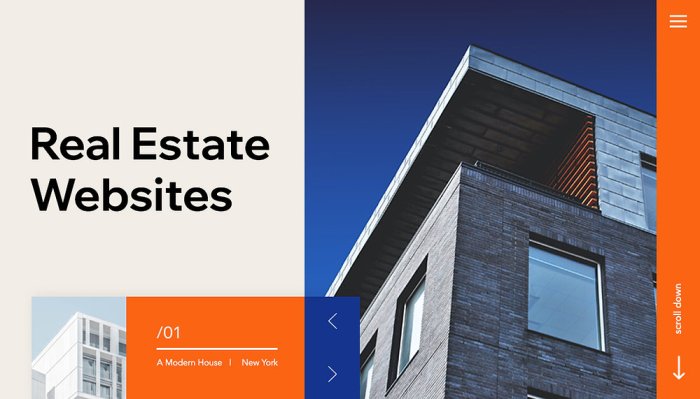
In conclusion, a real estate agent website is not just a virtual storefront but a powerful tool that can elevate an agent's business to new heights. By incorporating the right elements and strategies discussed, agents can enhance their online presence and attract more clients.
FAQ Summary
Why is having a website crucial for real estate agents?
Having a website provides a platform to showcase listings, build credibility, and reach a wider audience beyond traditional marketing methods.
What should be included in the content of a real estate agent website?
Content should include property listings, informative blogs, client testimonials, and neighborhood guides to engage visitors.
How does mobile responsiveness impact a real estate website?
Mobile responsiveness ensures that the website adapts to different devices, providing a seamless user experience and reaching more potential clients.